How to Organize Kitchen Cabinets for Maximum Efficiency
Learn how to organize kitchen cabinets effectively to maximize space and improve kitchen workflow with practical tips and storage ideas.

Organizing kitchen cabinets effectively begins by grouping items by their use and frequency of access, creating zones such as cooking, baking, and cleaning. Prioritize placing everyday essentials within easy reach and utilize storage accessories to maximize vertical space. This approach transforms chaotic cabinets into orderly, accessible storage.
A well-organized kitchen cabinet system cuts down on clutter and improves meal preparation speed by making tools and ingredients readily accessible. It also reduces frustration from digging through drawers or shelves, leading to a more enjoyable cooking experience and a tidier kitchen environment overall.
This article will explore practical steps to organize kitchen cabinets, from planning layout zones and choosing appropriate storage accessories to organizing by item type and maintaining your setup. We’ll also compare various storage solutions and answer frequently asked questions about cabinet organization.
Planning Your Kitchen Cabinet Layout
Creating Functional Zones
Designate specific areas in your kitchen cabinets for tasks like cooking, baking, food storage, and cleaning supplies. This zoning improves efficiency by grouping related items together, so everything needed for a task is located nearby.
For example, place pots, pans, and cooking utensils near the stove, while baking ingredients and tools should be grouped in another section. Cleaning supplies are best stored away from food items but still easily accessible.
- Cooking zone: pots, pans, spatulas
- Baking zone: measuring cups, mixing bowls, baking sheets
- Cleaning zone: detergents, sponges, trash bags
Assessing Cabinet Space and Accessibility
Evaluate your cabinets’ shelf height, depth, and accessibility to optimize storage. Adjustable shelves or pull-out trays enhance flexibility, allowing you to tailor the space to your needs.
Keep frequently used items at eye level or lower shelves for easy grabbing, and reserve higher shelves for seasonal or rarely used tools. This arrangement prevents overloading and wasted space.
- Use tiered organizers for spices or canned goods
- Install lazy susans in corner cabinets
- Add pull-out trays for heavy pots
Using Storage Accessories to Maximize Space
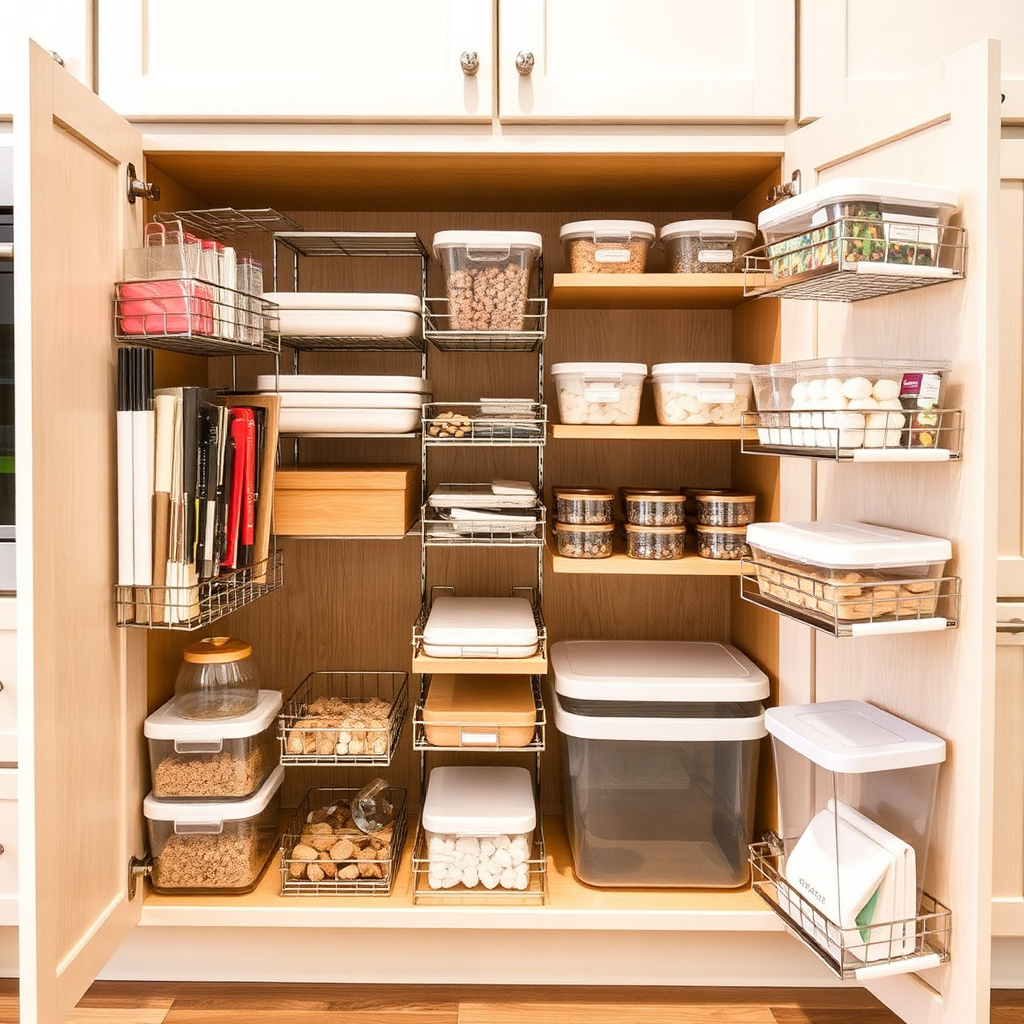
Pull-Out Racks and Trays
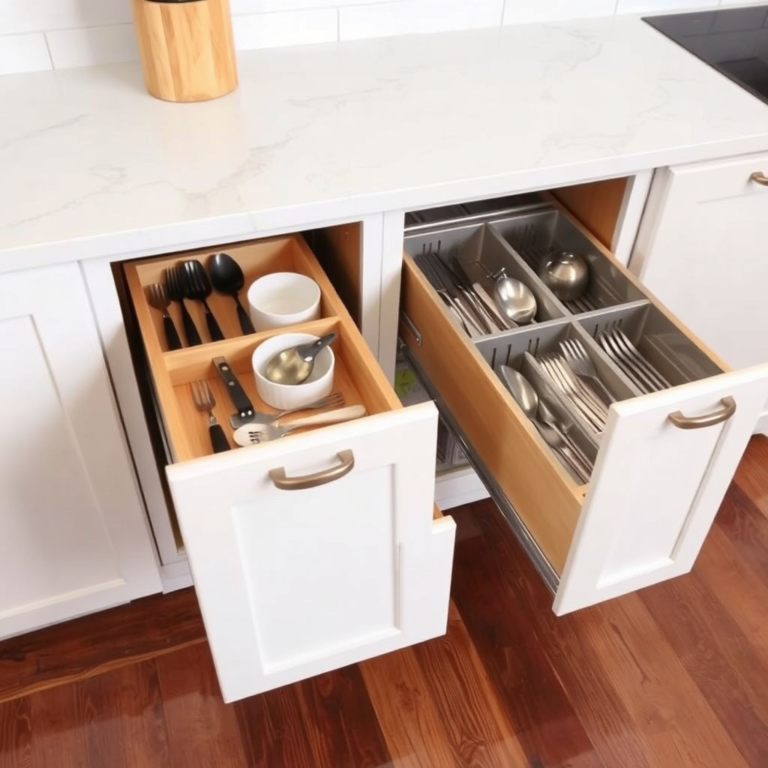
Pull-out racks let you access deep cabinet contents without reaching or straining. These are especially useful for storing pots, pans, or pantry items in lower cabinets.
They keep items visible and organized and make cleaning easier. Consider installing pull-out trays with compartments if you store many small items.
- Counterbalance efficiency with weight limits
- Ideal for heavy cookware or spices
- Available in wire, wood, or plastic
For more on this, see our related guide: How to Organize Food Storage Containers for a Clutter-Free Kitchen.
Shelf Risers and Tiered Organizers
Shelf risers and tiered organizers create extra layers within a cabinet, doubling usable vertical space. They work well for stacking plates, canned goods, or glassware safely.
These accessories prevent stacking clutter that can lead to breakage or digging through piles. Transparent models also provide quick visual access to contents.
- Perfect for narrow spaces
- Helps in organizing by category
- Easy to clean materials
Organizing by Item Type
Grouping Like Items Together
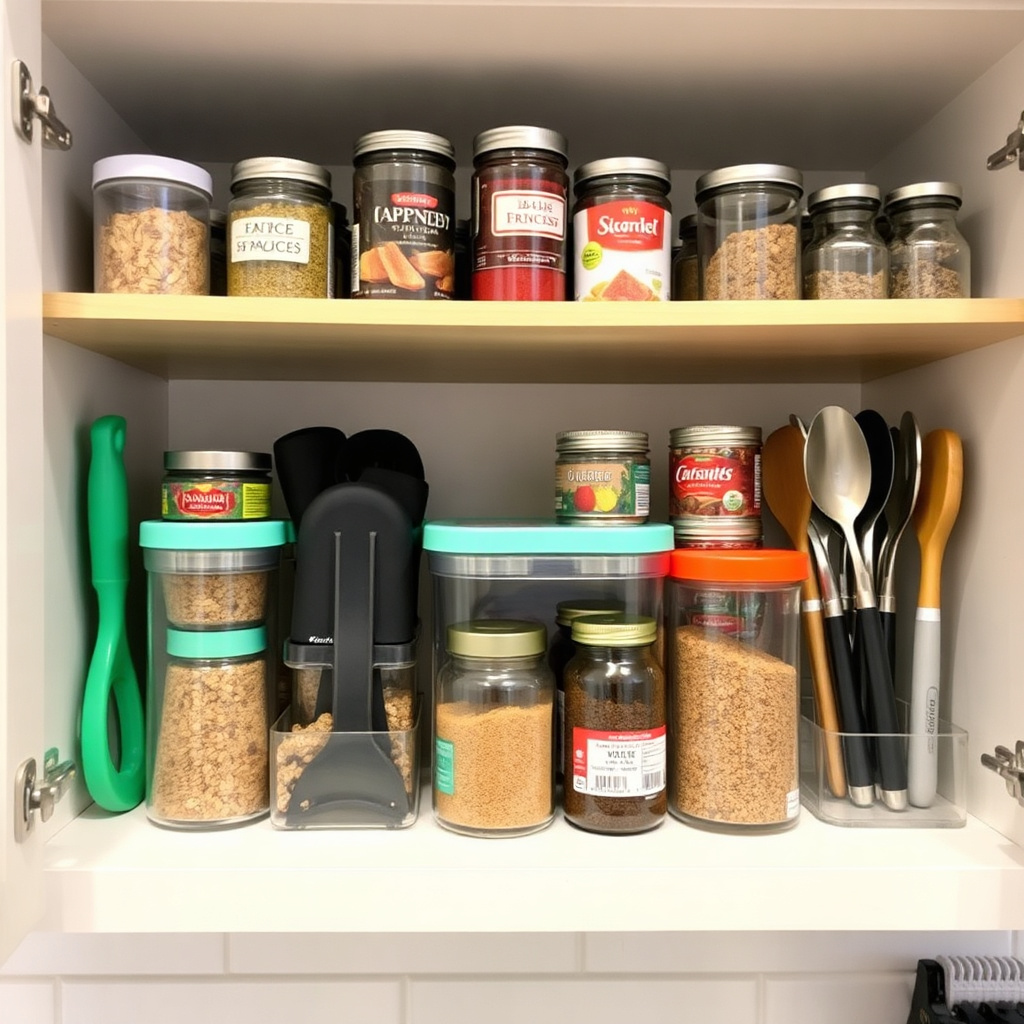
Sort kitchen items by category—such as spices, dry goods, cookware, and utensils—to simplify locating what you need. Use labeled containers, baskets, or bins to keep groups tidy and contained.
Grouping reduces searching time and avoids overcrowding, making the kitchen more pleasant to work in.
- Dry goods in airtight containers
- Separate baskets for plastic wraps and bags
- Dedicated drawer organizers for utensils
Using Clear Containers and Labels
Clear containers reveal contents instantly, speeding up food prep and inventory checks. Labeling containers ensures you remember what’s inside, preventing expired or forgotten items.
Labels are also helpful for groupings that look similar, like different baking ingredients or spice blends.
- Use moisture-proof labels
- Choose stackable container shapes
- Maintain consistency for easy scanning
Maintaining an Organized Kitchen Cabinet System
Regular Cleaning and Decluttering
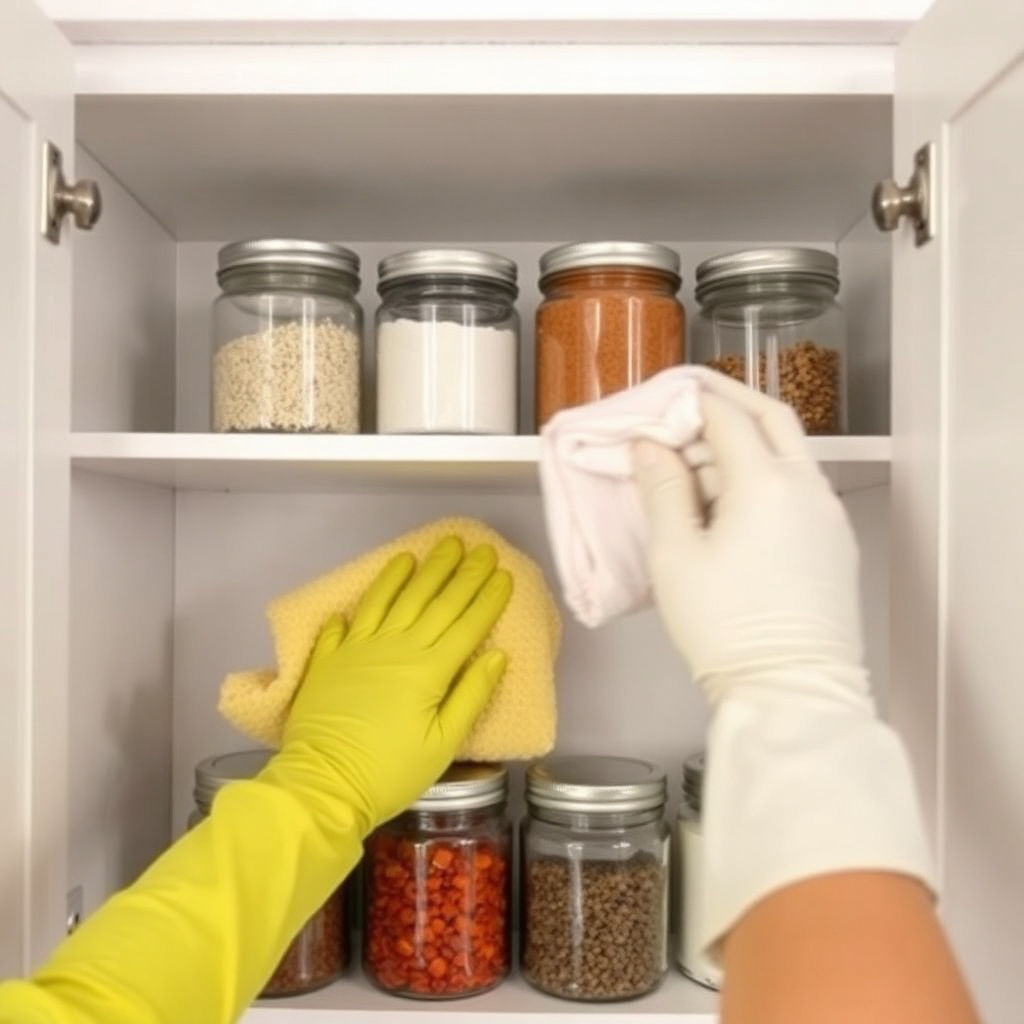
Schedule periodic checks to remove expired food, donate unused tools, and wipe down shelves. Regular cleaning helps preserve hygiene and prevents cabinets from becoming congested.
Evaluate your storage setup during these cleaning sessions and adjust as your needs change over time.
- Monthly or quarterly inventory checks
- Wipe shelves before restocking
- Donate or recycle unused items
Adapting to Changing Needs
Life changes such as new recipes, appliances, or family size call for adjustments in cabinet organization. Stay flexible by choosing modular organizers and adjustable shelves.
Reassessing and tweaking your system ensures it remains efficient and suited to your current kitchen use.
- Swap seasonal items routinely
- Add organizers as cooking habits evolve
- Keep a small notepad for future reorganization ideas
Maximizing Small or Limited Kitchen Cabinets

Using Vertical Space Wisely
Make use of cabinet doors and vertical height by installing hooks, racks, or magnetic strips for knives and utensils. Vertical dividers can store baking sheets or cutting boards upright.
This opens up valuable shelf space and keeps frequently used tools within easy reach.
- Install adhesive or screw-in hooks
- Use tension rods for hanging lids
- Magnetic strips for metal tools
For more insights into kitchen cabinetry and their design, explore kitchen cabinet organization tips on Wikipedia. kitchen cabinet organization tips on Wikipedia.
Implementing Multi-Functional Storage Solutions
Choose foldable racks or stackable storage boxes that can be rearranged as needed. Incorporate pull-out spice racks or corner carousel units to squeeze more from tight spaces.
These solutions allow compact kitchens to maintain neatness and accessibility despite limited cabinet volume.
- Foldable drying racks stored inside cabinets
- Carousel lazy susans for corners
- Stackable baskets or boxes
Kitchen Cabinet Storage Solutions Category Comparison
This table compares common kitchen cabinet storage options highlighting their suitability, cost, and ease of installation.
| Category | Suitability | Cost Range | Installation Effort |
|---|---|---|---|
| Pull-Out Racks | Lower and deep cabinets, heavy cookware | $40 – $150 | Moderate, may require tools |
| Shelf Risers | Standard shelves for dishes, cans | $10 – $30 | None, just place on shelf |
| Lazy Susan Carousels | Corner cabinets | $20 – $70 | Moderate, screws required |
| Clear Storage Containers | Dry goods, spices | $5 – $25 each | None, just fill and stack |
| Magnetic Strips & Hooks | Cabinet doors for utensils | $10 – $40 | Easy, adhesive or screws |
| Pull-Out Spice Racks | Narrow spaces for spice jars | $30 – $80 | Moderate |
Frequently Asked Questions
What are the best ways to organize spices in kitchen cabinets?
Use pull-out racks, tiered organizers, or magnetic spice jars to keep spices visible and easy to access. Labeling each container helps maintain order and speeds up cooking.
How often should I clean and reorganize my kitchen cabinets?
Aim to clean and reorganize kitchen cabinets every 3-6 months to remove expired items, adjust storage for new needs, and keep everything tidy and hygienic.
Can I organize kitchen cabinets in a small kitchen effectively?
Yes, by utilizing vertical space, using multi-functional organizers, and maximizing cabinet doors for storage, small kitchens can be organized efficiently to save space and stay functional.
Are clear storage containers better for kitchen organization?
Clear storage containers provide quick visual access to contents, making it easier to find and monitor supplies, but they should be labeled for better organization and to prevent confusion.
How do I decide what items to keep in upper versus lower kitchen cabinets?
Store frequently used and heavier items in lower cabinets for easy access and safety. Use upper cabinets for lighter, less frequently used items to optimize reach and reduce strain.
Key Takeaways
- Group kitchen items by function and frequency to create efficient zones.
- Use versatile storage accessories to fully exploit available cabinet space.
- Maintain organization through regular cleaning and adapting to changing needs.
- Employ vertical and door-mounted storage solutions in small kitchens.
Conclusion
Organizing kitchen cabinets requires a strategic approach that prioritizes functionality, accessibility, and efficient use of space. By defining zones based on how you use your kitchen, incorporating smart storage solutions like pull-out racks and shelf risers, and categorizing items by type, you can create a system that streamlines your cooking process and reduces daily frustration. Careful assessment of your cabinet layout and thoughtful placement of items ensure that the cabinet’s full potential is realized without overcrowding or wasted space.
For those with ample cabinet space, investing in modular organizers and clear storage containers provides flexibility and ease of use. In tighter kitchens, maximizing vertical space with hooks, magnetic strips, and multi-functional racks can dramatically increase storage capacity. Regularly evaluating and adjusting your system keeps things from becoming cluttered over time. Specific setups, such as pull-out spice racks near cooking zones or lazy Susan carousels for corner cabinets, offer convenience tailored to your workflow and kitchen layout.
Getting started with kitchen cabinet organization is best approached by assessing your current usage and identifying your priorities—whether that’s easy access to daily essentials or neat separation of bulk pantry goods. Begin with small changes like adding shelf risers or investing in some clear containers, then expand by introducing zones and pull-out racks as needed. With these practical steps, your kitchen cabinets will become a model of order and efficiency.