How Long to Cook Burgers on Grill for Perfect Results
Discover how long to cook burgers on grill for juicy, flavorful patties every time. Learn precise grilling times and tips for safe cooking.

Cooking burgers on a grill typically takes about 8 to 15 minutes, depending on thickness, heat level, and doneness preference. For medium doneness, a standard ¾-inch thick patty needs around 4-5 minutes per side on medium-high heat. Using a meat thermometer to check internal temperature is the most reliable way to ensure safety and taste.
Getting grilling time right matters for both texture and food safety. Undercooked burgers risk health hazards, while overcooked patties can become dry and tough. Variations in grill temperature, patty size, and type of meat influence the cooking time, so having a method tailored to your setup guarantees consistent meals.
This article will explore how to measure cooking time, factors affecting it, and tips for managing different burger types and doneness levels on the grill. You will also find detailed advice on tools to check doneness and ways to handle common grilling challenges.
Understanding Grill Temperature and Its Impact on Cooking Time
Ideal Grill Temperature for Burgers
Maintaining a grill temperature around 375°F to 400°F (190°C to 204°C) is ideal for cooking burgers evenly. This range allows the exterior to develop a flavorful crust while the inside cooks thoroughly without drying out. Temperatures above 450°F might char the outside too fast, leaving the inside undercooked.
Using a reliable grill thermometer or the built-in gauge is important because grill heat can fluctuate due to wind, lid position, and charcoal or gas settings. Adjust flames or vents to stay within the optimal range for consistent results.
- Aim for medium-high heat (375°F to 400°F)
- Use a grill thermometer for accuracy
- Avoid very high heat to prevent burning
How Grill Type Affects Cooking Times
Gas grills offer more consistent and controllable heat, making it easier to maintain target temperatures for burgers. Charcoal grills produce a smokier flavor but require more attention to air vents and coals to keep steady heat. Electric grills provide mild heat that's often less intense, extending cooking times slightly.
Each grill type requires adjustments. For example, charcoal grills might need preheating of 15-20 minutes to reach ideal temperatures. Gas grills typically heat up in around 10 minutes, and electric models vary widely depending on design and power.
- Gas grills: Easy temperature control
- Charcoal grills: Add smoky flavor
- Electric grills: Lower heat, longer times
Burger Thickness and Doneness Levels Guide

Effect of Patty Thickness on Cooking Time
Thicker burger patties require longer grill times to reach a safe internal temperature without burning the exterior. A ¾-inch patty should be grilled about 8 to 10 minutes total, while thicker 1-inch or 1¼-inch patties might take 12 to 15 minutes.
For thinner patties under ½ inch, cooking takes only 4 to 6 minutes total. Adjust grill heat and flipping frequency to avoid overcooking thin burgers, as they cook quickly and can dry out.
- ¾ inch thick: 8-10 minutes
- 1 inch thick: 12-15 minutes
- Under ½ inch: 4-6 minutes
For more on this, see our related guide: How Long to Grill Burgers for Perfect Flavor and Juiciness.
Target Doneness and Internal Temperature
Burger doneness levels are tied to specific internal temperatures measured with a meat thermometer. For safety and taste, aim for: medium-rare at 130°F-135°F (54°C-57°C), medium at 140°F-145°F (60°C-63°C), medium-well at 150°F-155°F (66°C-68°C), and well-done at 160°F (71°C) or above.
Ground beef must reach at least 160°F internally to avoid harmful bacteria. When cooking alternative meats like turkey or chicken patties, cook to 165°F for safety. Checking temperature regularly helps prevent overcooking.
- Medium-rare: 130°F-135°F
- Medium: 140°F-145°F
- Well-done: 160°F or higher
Techniques for Perfectly Grilled Burgers

When and How Often to Flip Burgers
Flipping burger patties only once during grilling is recommended for even cooking and preventing breaking. Flip after 4-5 minutes for a ¾-inch patty on medium-high heat, then grill the other side for a similar time period.
Avoid pressing down on the burgers with a spatula as this squeezes out juices and leads to dry texture. Let the patty cook naturally to retain moisture.
- Flip once after 4-5 minutes
- Avoid pressing down burgers
- Use a wide spatula for flipping
Managing Flare-Ups and Avoiding Dryness
Flare-ups occur when dripping fat ignites causing sudden high flames. To control this, trim excessive fat, keep a spray bottle of water nearby, and move burgers away temporarily if flames rise too high.
Grilling with a lid on can reduce dryness by trapping heat and moisture, effectively cooking burgers internally while locking in flavor.
- Trim excess fat from patties
- Keep water spray bottle on hand
- Use grill lid to retain moisture
Special Considerations for Different Burger Types

Cooking Turkey and Chicken Burgers Safely
Poultry burgers require reaching a higher internal temperature of 165°F (74°C) for safety, which means slightly longer cooking times than beef burgers. Expect 6-7 minutes per side for medium-thick patties, with constant heat management to avoid dryness.
Because these leaner meats are prone to drying out, adding moisture like grated vegetables or a bit of oil in the patty mix helps maintain juiciness when grilling.
- Cook to 165°F internal temperature
- Add moisture to patties
- Avoid overcooking
Grilling Plant-Based and Veggie Burgers
Plant-based and veggie burgers can vary widely in composition and moisture levels. Some grill directly like meat, needing about 4-6 minutes per side, while others benefit from a grill basket or foil to prevent sticking and keep shape.
Because these patties do not require a minimum safety temperature like meat, cooking focus is on texture and heating through, sometimes followed by a sear for flavor and appearance.
- Usually 4-6 minutes per side
- Use grill basket for delicate patties
- Focus on heating rather than safety temperature
Tools and Tips for Checking Burger Doneness
Using a Meat Thermometer Effectively
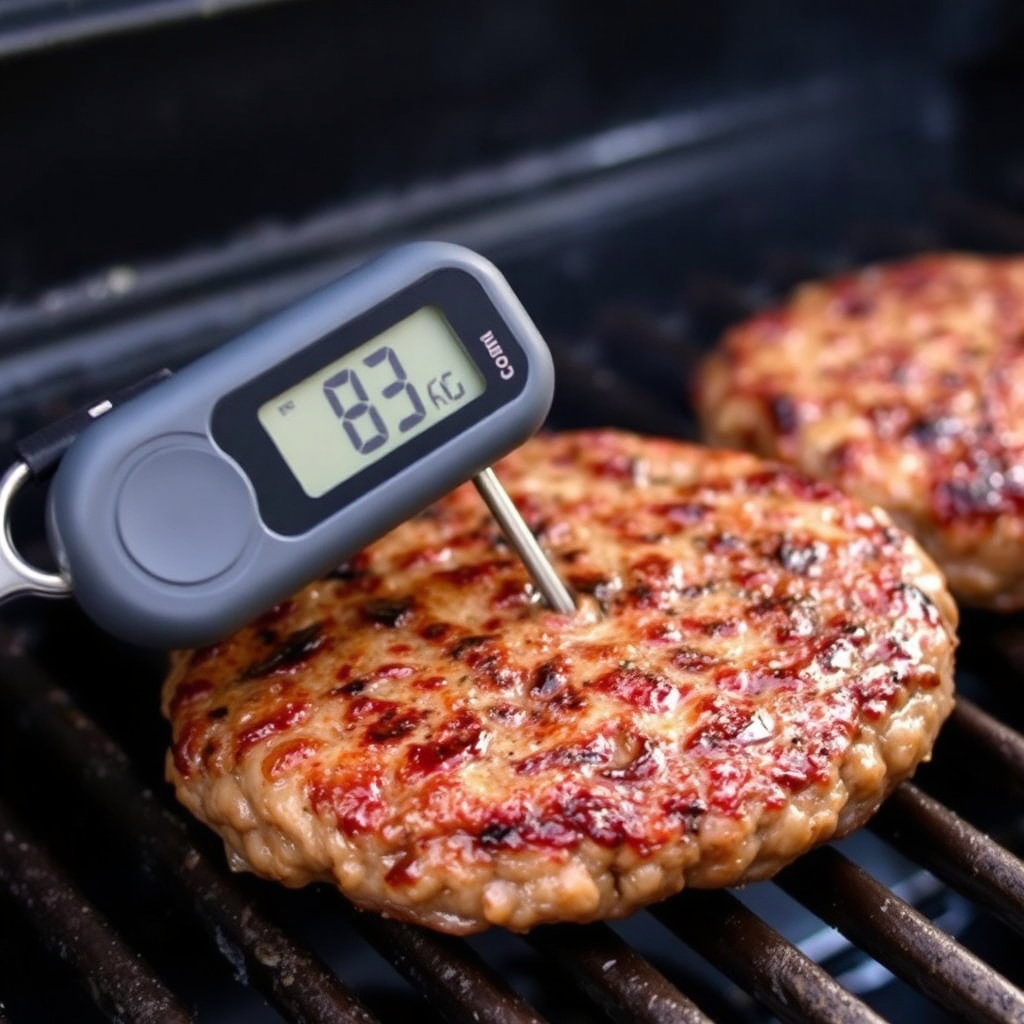
Insert an instant-read meat thermometer into the thickest part of the burger to get an accurate temperature reading. Avoid touching the grill or fat pockets, which can give false results.
Taking temperature after flipping and near the expected finish time helps decide if more grill minutes are needed. This tool eliminates guesswork and reduces the risk of undercooked burgers.
- Use instant-read thermometer
- Insert into thickest part
- Avoid touching bone or fat
For more about grilling techniques and safety, see the grilling basics on Wikipedia. grilling basics on Wikipedia.
Visual and Touch Tests for Doneness
If a thermometer is unavailable, consider using color and texture cues. Medium burgers will have a warm pink center, juices are usually clear but slightly pink. Well-done patties are uniformly brown or gray inside.
Press the center of the patty gently—medium will feel springy, while well-done feels firm. These cues are less precise but useful in a pinch.
- Look for juice color
- Check interior color when sliced
- Feel patty firmness when pressed
Grilling Time for Different Burger Types Comparison
This table compares cooking times and recommended temperatures for various burger types to help you pick the best method for your meal.
| Burger Type | Grill Time per Side | Internal Temperature Target | Flavor Notes |
|---|---|---|---|
| Beef (¾ inch) | 4-5 minutes | 160°F (71°C) | Classic smoky, juicy flavor |
| Beef (1 inch) | 6-7 minutes | 160°F (71°C) | Thicker cut, more char |
| Turkey/Chicken | 6-7 minutes | 165°F (74°C) | Lean, light taste |
| Veggie | 4-6 minutes | No minimum | Varies by ingredients |
| Lamb | 5-6 minutes | 160°F (71°C) | Robust, rich flavor |
Frequently Asked Questions
How do I know when my burger is fully cooked without a thermometer?
Check for clear juices and a firm texture. Medium burgers show some pink in the center and springy to the touch, while well-done are brown inside and feel firm when pressed.
Can I cook burgers on a low-temperature grill setting?
Cooking on low heat is possible but takes longer and risks drying out the patty. Medium-high heat is preferred for balanced crust and juiciness.
How often should I flip burgers while grilling?
Flip burgers only once, about halfway through the cooking time, to promote even cooking and prevent breaking the patty.
Why did my burgers burn on the outside but remain raw inside?
This happens if grill heat is too high or patties are too thick. Lower the temperature and cook longer for thorough cooking without charring.
Should I cover the grill while cooking burgers?
Covering with the lid traps heat and helps cook burgers evenly, retaining moisture and speeding the cooking process.
Key Takeaways
- Grill burgers at 375°F to 400°F for best balance of crust and doneness.
- Patty thickness directly impacts total cooking time.
- Use a meat thermometer to confirm safe internal temperatures.
- Flip burgers once and avoid pressing to retain juiciness.
Conclusion
Knowing how long to cook burgers on grill is about balancing heat, patty size, and doneness preferences. The decision-making process should prioritize safe internal temperatures—160°F for beef and 165°F for poultry—while managing char and juiciness through proper grill temperature and flipping techniques. Practical experience combined with thermometer use ensures consistently good results tailored to your taste.
For quick backyard grilling of standard beef burgers about ¾ inch thick, plan for 4-5 minutes per side on medium-high heat. Thicker patties or alternatives like turkey need longer cooking times and careful monitoring of temperature. Vegetarians can enjoy plant-based burgers cooked slightly differently but benefit from grilling tips like using a basket or foil. These distinctions help customize your timing and technique for each burger experience.
Ultimately, the next step is to experiment with your grill’s temperature settings and use a meat thermometer to check doneness accurately. This approach reduces guesswork and elevates the quality of your grilled burgers, making every cookout satisfying for everyone at the table.